
Amazon Shopping Recommendations
Role: UX Design Lead
Teams: Product Management, Engineering and Business Development
What is Amazon Shopping Recommendations (ASR)?
Amazon Shopping Recommendations (ASR) are bespoke standalone ads that allow shoppers to discover and purchase products outside of Amazon—reaching them anywhere on the internet. More importantly, the products are selected based on the content of the page.
For example:
Reading an article about the best hiking spots in Tahoe? Show hiking‑related products.
Reading a new recipe? Show kitchen items relevant to that recipe.
In theory, matching products to the context of what users are reading should drive ad performance and increase engagement. However, the first version of the ad focused more on proving technical feasibility than on performance and user experience. As a result, ASR’s initial performance fell far below expectations.
The original ad experience
Below was the existing ad design. It was a play on the google search results experience of question prompts and answers to create an ad experience that blended in with the page content.
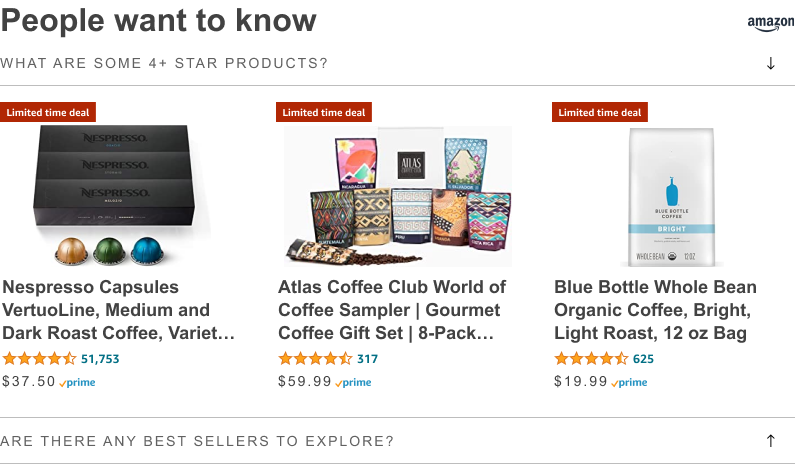
The ASR program was a collaboration between APS, which supplied the publishers, and Sponsored Products, which sourced the ads. At leadership’s request, I worked with the Sponsored Products UX design team to evolve the ASR experience.
The Redesign
Pain points
Beyond poor performance, publishers were dissatisfied with the vertical size of the ASR ad unit. Vertical space is valuable on any page, but even more so on mobile devices where screen size and scrolling space are limited.
However, making ads smaller risked further reducing performance. We needed to find a balance between preserving space and maintaining ad effectiveness.
We also discovered that the “prompts” feature was ineffective. The first prompt was open by default, yet data showed users rarely—if ever—opened the second prompt. Removing the prompt concept gave us room to increase image sizes and improve overall usability.
Leveraging research
We leveraged a previous survey of more than 2,000 Amazon Prime customers designed to understand which product detail elements are most important to shoppers.
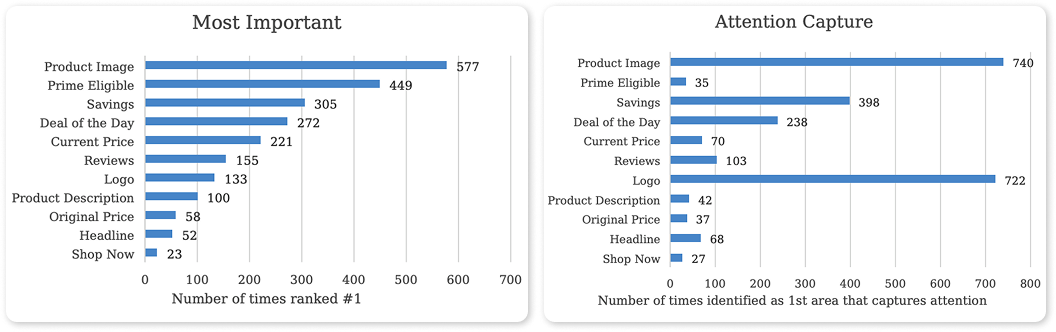
Based on this research, we focused on maximizing image size while still respecting publishers’ need to reduce overall ad height. We also prioritized including key product elements such as “Prime Eligible” and “Savings.”
A/B Testing
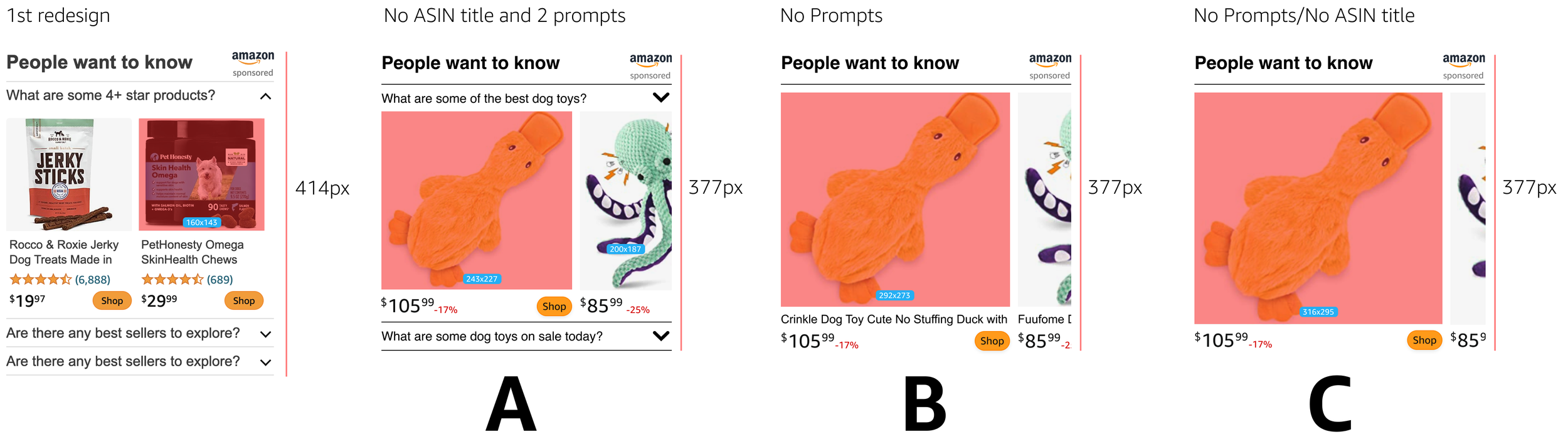
Utilizing the pain points and research, we created an a testing plan to find the correct balance between ad size and performance. We focused on the inclusion/exclusion of prompts, product title, and image size. We create a series of designs that ultimately produced ads that overall had the same height but different image sizes depending on these previous factors.
We A/B tested the ads and found that B performed just as well as C however since it also included the product title, we decided to go forward with B.
Results
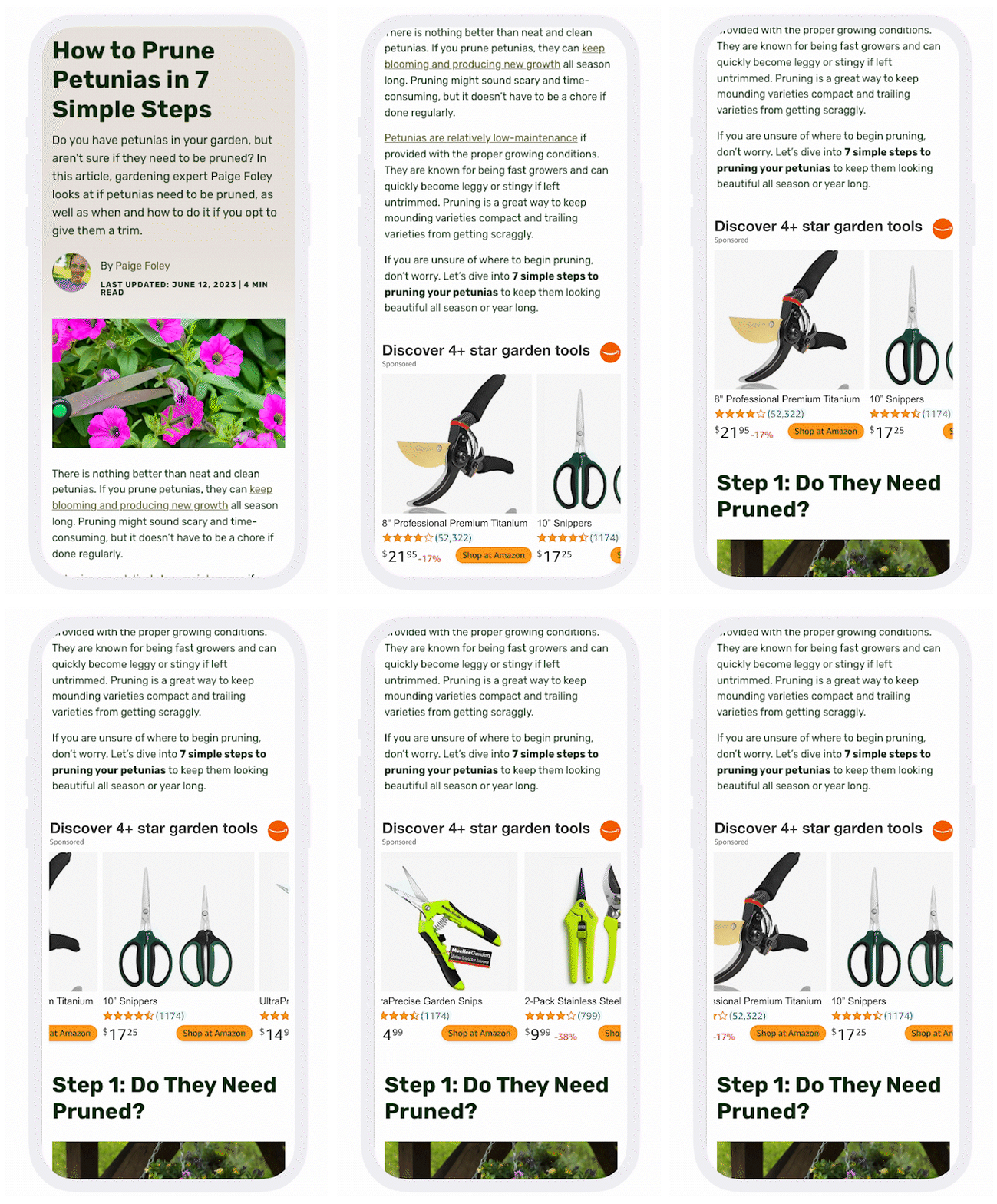
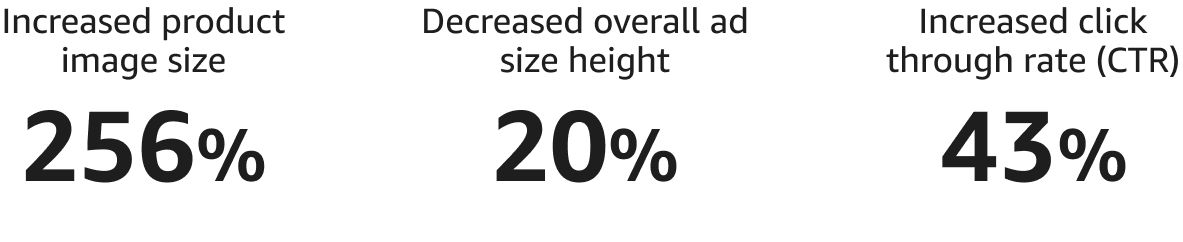
Using research, A/B testing and publisher feedback, we were successful in crafting an ad experience that addressed publisher concerns, increased performance and improved end-user experience.
Conclusion
This case study highlights the power of research, testing, and iteration to deliver results. It also showcases the value of cross‑functional collaboration: coordinating with publishers to gather feedback, working with product managers to develop a testing plan, and partnering with a UX design team outside my own for additional resources.